
In our recent survey conducted with 1,000 Americans, over half of Gen Xers—those born between 1965 and 1980—reported feeling less confident about their retirement readiness compared to just a year ago.
According to our analysis, concerns about rising costs, economic volatility, and dwindling trust in government programs like Social Security are driving this shift in sentiment.
Insights from our survey work show that many Gen Xers are now reassessing their financial plans, adjusting their retirement timelines, and redefining what a “comfortable retirement” truly means in today’s uncertain economic climate.
Key Findings:
- 52% of Gen Xers feel less confident than last year about having enough savings for retirement.
- 61% of Americans are not confident that government programs will still provide adequate support when they retire.
- 51% of Americans said recent economic events caused them to adjust their retirement plans.
- 20% of Americans making under $50,000 expect to retire at 70 or older.
- 74% of Americans are likely to delay retirement due to financial concerns.
- 52% of parents have increased their savings or investments in the past year due to economic uncertainty.
- 51% of parents have considered relocating in retirement to reduce living expenses.
- 52% of Americans often worry about outliving their retirement savings.
- 76% of Americans agreed that their definition of a ‘comfortable retirement’ has changed in the past few years.
Over Half of Gen Xers Report Declining Retirement Confidence, But Optimism Remains on the Horizon
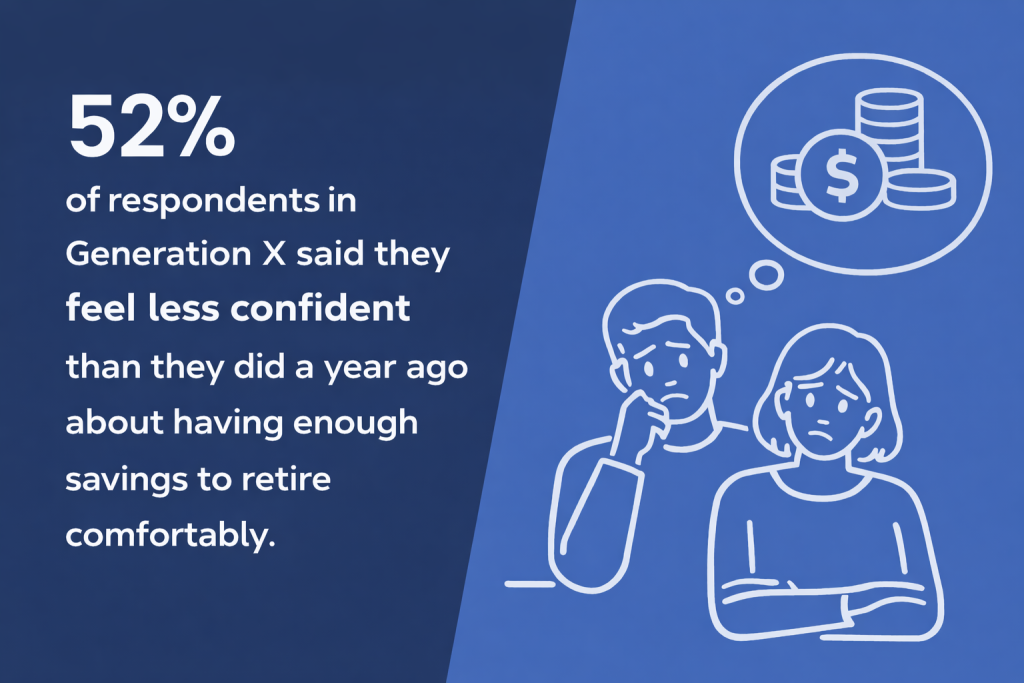
Insights from our survey work reveal a growing sense of uncertainty among Gen Xers when it comes to retirement readiness. In a nationwide poll of 1,000 Americans, 52% of respondents in Generation X—those born between 1965 and 1980—said they feel less confident than they did a year ago about having enough savings to retire comfortably.
While the figure highlights financial concerns facing this cohort, it also underscores a pivotal moment: many Gen Xers are now actively reevaluating their strategies, with a renewed focus on planning, education, and smarter savings behavior.
Waning Trust in Government Support Adds to Financial Jitters
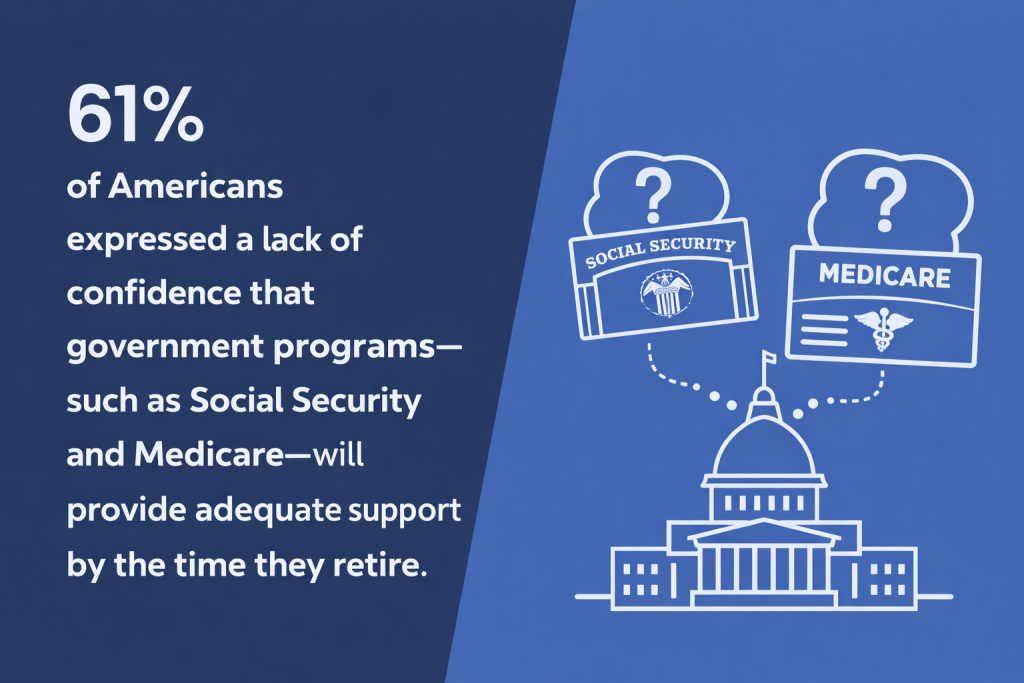
Our findings further reveal that uncertainty about retirement extends beyond personal savings. According to our survey, 61% of Americans expressed a lack of confidence that government programs—such as Social Security and Medicare—will provide adequate support by the time they retire. This skepticism is especially pronounced among Gen X respondents, many of whom are entering their peak earning years yet remain acutely aware of the long-term sustainability challenges facing these programs.
“61% of Americans expressed a lack of confidence that government programs—such as Social Security and Medicare—will provide adequate support by the time they retire”
The combination of declining personal retirement confidence and diminished trust in institutional safety nets paints a complex financial picture. However, this sentiment is also prompting more proactive behavior. As concerns mount, many Gen Xers are not only reassessing their savings habits but are also seeking out independent financial tools and professional guidance to build a more resilient retirement plan.
Economic Shifts Forcing a Rethink of Retirement Timelines
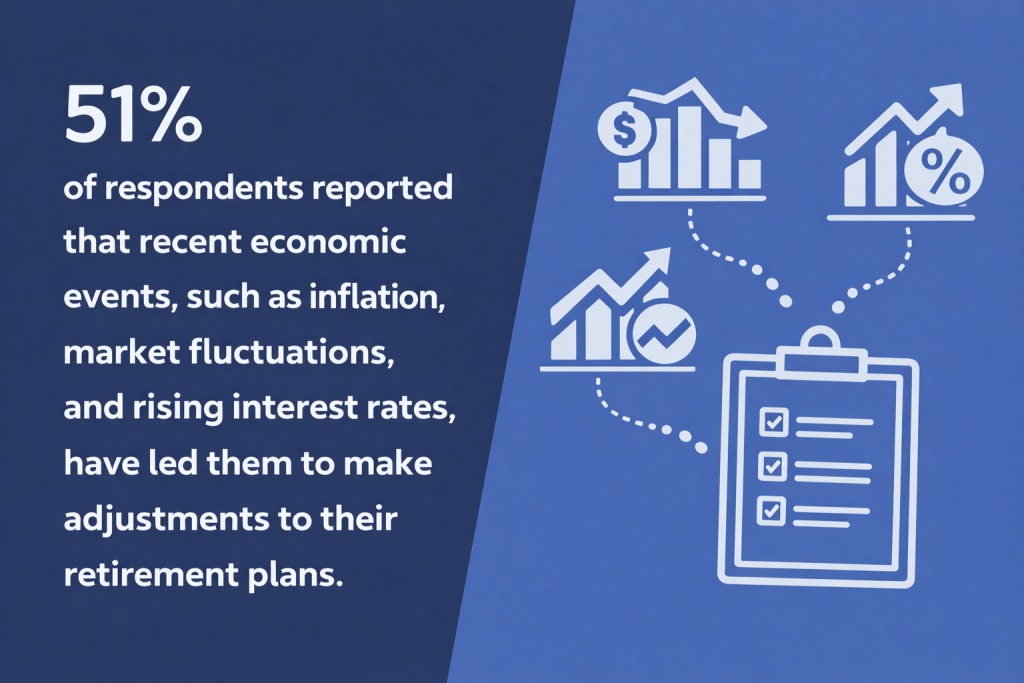
Our research also shows that recent economic volatility is directly impacting how Americans approach retirement planning. In our latest survey, 51% of respondents reported that recent economic events, such as inflation, market fluctuations, and rising interest rates, have led them to make adjustments to their retirement plans. For some, this has meant delaying their retirement age, while others have increased contributions to retirement accounts, diversified their investments, or explored more predictable income strategies such as converting a portion of savings into guaranteed income using options like a 300k annuity, to better weather financial uncertainty.
“51% of respondents reported that recent economic events, such as inflation, market fluctuations, and rising interest rates, have led them to make adjustments to their retirement plans”
This trend is particularly significant for Gen Xers, who are navigating a critical window for retirement preparation. Faced with both personal doubts and broader economic instability, this group is increasingly taking action to regain control over their financial futures. The shift reflects not just concern, but a growing determination to adapt and secure long-term stability in an unpredictable economic landscape.
Lower-Income Americans Face Extended Working Years
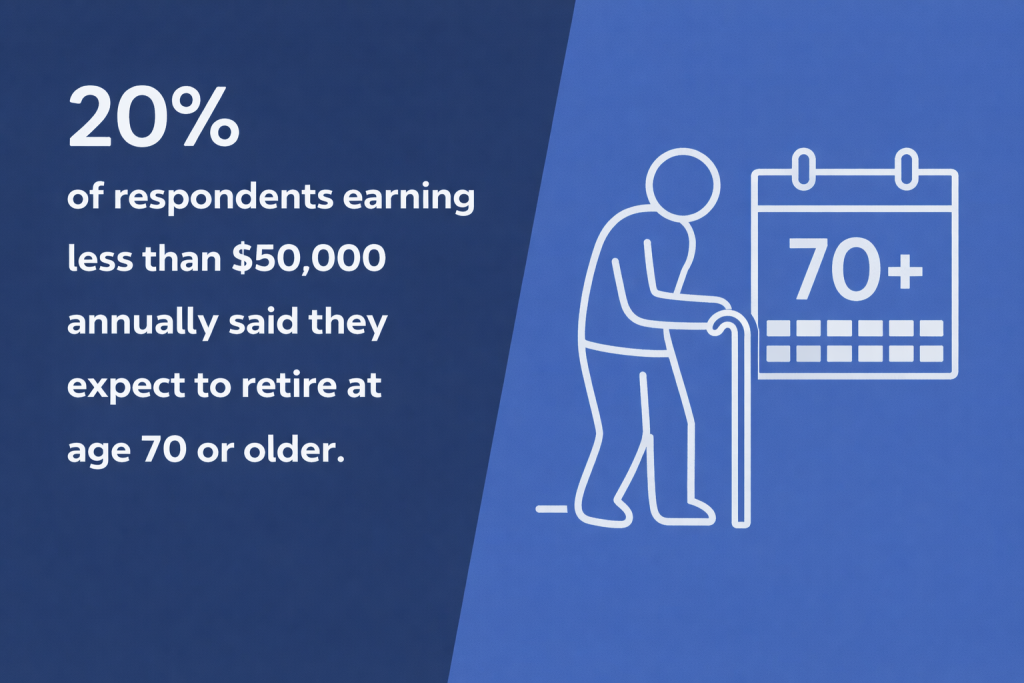
Our analysis highlights a stark income-based disparity in retirement expectations. Among survey respondents earning less than $50,000 annually, 20% said they expect to retire at age 70 or older. This finding points to the significant pressure lower-income households face in trying to accumulate sufficient retirement savings often balancing short-term financial needs with long-term goals.
“20% said they expect to retire at age 70 or older”
For Gen Xers in this income bracket, the outlook is particularly sobering. With fewer years left to recover from financial setbacks and less margin for aggressive saving, many are bracing for the possibility of delayed retirement. This underscores the urgent need for targeted financial education, accessible planning resources, and policies that support long-term financial security for working Americans across all income levels.
Financial Pressures Driving Widespread Delays in Retirement
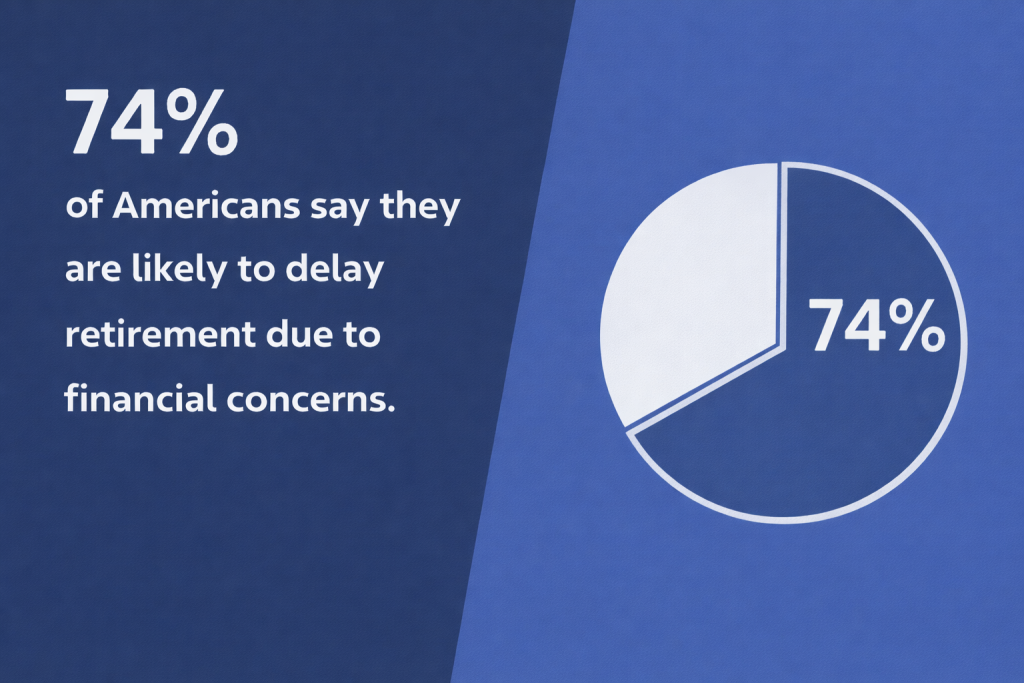
According to our report, a striking 74% of Americans say they are likely to delay retirement due to financial concerns. This overwhelming majority reflects the growing weight of economic uncertainty on long-term planning especially as inflation, healthcare costs, and market volatility continue to strain household budgets.
“74% of Americans say they are likely to delay retirement due to financial concerns.”
For Gen Xers, many of whom are entering their 50s and early 60s, this delay is less of a choice and more of a necessity. Insights from our survey work show that the fear of outliving savings, coupled with doubts about government support, is pushing this generation to reconsider traditional retirement timelines. Rather than envisioning retirement as a fixed milestone, many are now treating it as a flexible goal, one that will depend heavily on continued income, careful planning, and long-term financial resilience.
For those with moderate savings, evaluating options like a $500k annuity can offer predictable income streams that support delayed or phased retirement strategies.
Fear of Outliving Savings Weighs Heavily on Retirement Outlook
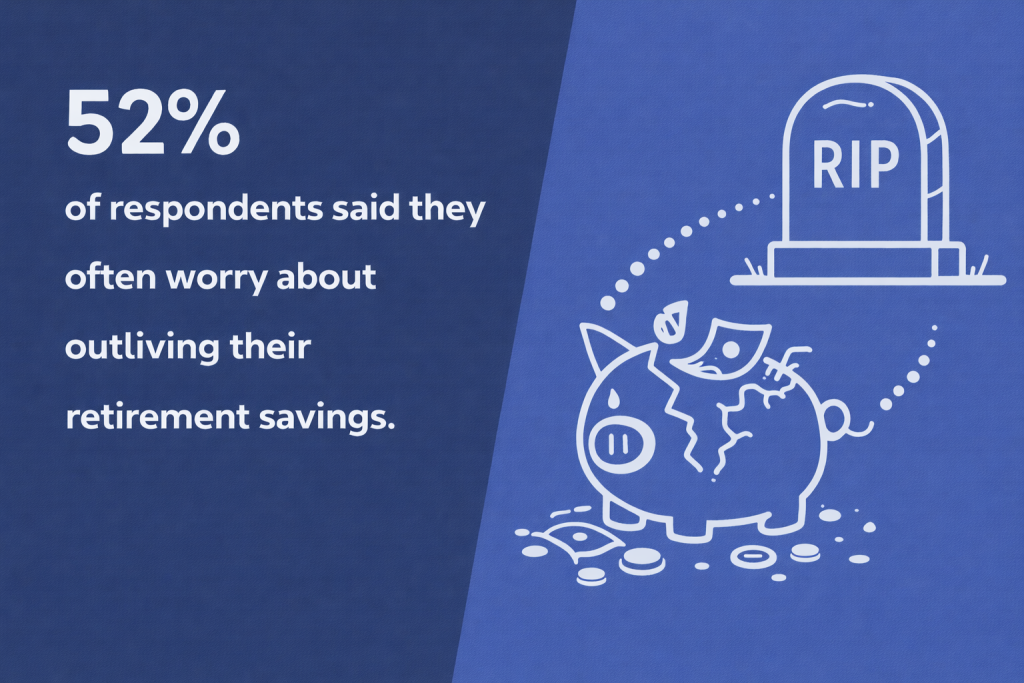
Our research underscores a deep-seated concern shared by many Americans: the fear of running out of money in retirement. According to our survey, 52% of respondents said they often worry about outliving their retirement savings. This anxiety cuts across income levels and age groups, but it’s especially pronounced among Gen Xers, who are now facing the realities of approaching retirement with limited time to course-correct.
“52% of respondents said they often worry about outliving their retirement savings”
This persistent worry is reshaping how people plan for the future. Rather than focusing solely on reaching a target retirement age, many are shifting toward strategies that prioritize longevity planning such as securing guaranteed income sources, reevaluating spending habits, and extending their working years. The concern is clear, but so is the response: Americans are increasingly aware that lasting financial security in retirement requires not just saving more, but planning smarter.
The Meaning of a ‘Comfortable Retirement’ Is Evolving
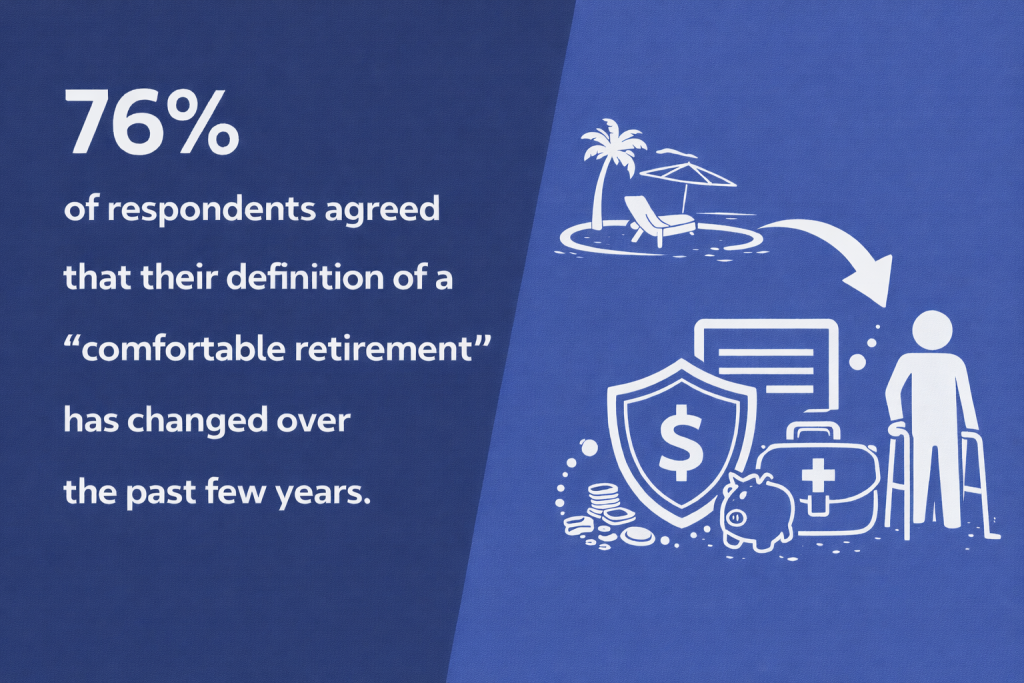
Our report reveals a significant shift in how Americans envision retirement. In our survey, 76% of respondents agreed that their definition of a “comfortable retirement” has changed over the past few years. Rather than picturing a leisurely lifestyle filled with travel and early retirement, many now associate comfort with financial stability, manageable healthcare costs, and the ability to maintain independence without burdening family.
“76% of respondents agreed that their definition of a “comfortable retirement” has changed over the past few years.”
For Gen Xers, whose retirement horizon is fast approaching, this evolving definition reflects a practical adjustment to today’s economic realities. Rising living expenses, market volatility, and uncertainty around public benefits have reshaped expectations. Comfort, for many, now means having enough to cover essentials, avoid debt, and withstand unexpected expenses especially for those with significant savings seeking long-term income strategies. In such cases, exploring options like a one million dollar annuity can provide the type of guaranteed income that aligns with this new, more resilient definition of retirement comfort.
Parents Take Strategic Steps to Secure Retirement
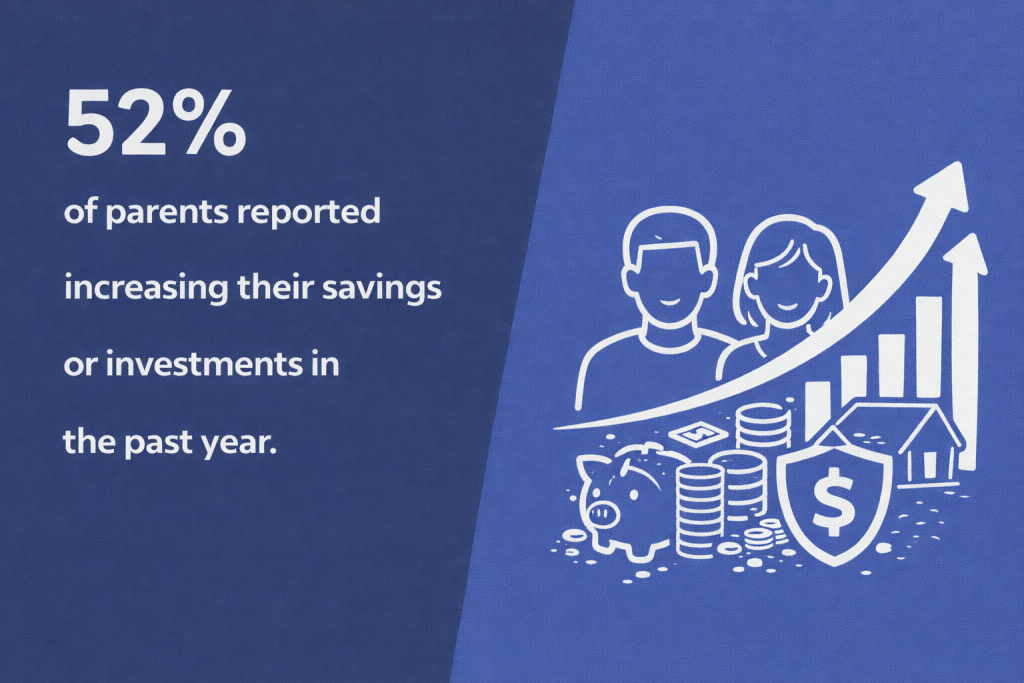
Our analysis shows that parents are not only saving more but also reevaluating their long-term lifestyle choices in response to economic uncertainty. According to our survey, 52% of parents reported increasing their savings or investments in the past year, a clear signal of heightened financial discipline. In parallel, 51% said they’ve considered relocating in retirement to lower their cost of living, reflecting a growing openness to major life changes in pursuit of financial stability.
“52% of parents reported increasing their savings or investments in the past year”
“51% said they’ve considered relocating in retirement to lower their cost of living”
For Gen X parents, these dual strategies boosting savings and exploring more affordable places to live highlight a practical, forward-looking mindset. Many are recognizing that achieving a secure retirement may require not only saving more, but also making bold, strategic decisions that align with shifting economic conditions and personal priorities.
Looking Ahead with Resilience and Resolve
While the road to retirement may feel increasingly uncertain for many Gen Xers, our findings reveal something deeper, a growing wave of awareness, adaptability, and action. In a time marked by economic shifts and fading trust in traditional safety nets, this generation is stepping up, recalibrating their goals, and taking real steps to secure their financial futures.
From boosting savings and seeking expert advice to reimagining what retirement truly looks like, Gen Xers are proving that it’s never too late to plan smarter and dream differently. The challenges are real, but so is the determination. And with the right tools, resources, and mindset, a fulfilling, stable retirement is still within reach for this generation and the ones that follow.
Methodology
This report is based on a nationally representative survey conducted in December 2025, polling 1,000 American adults across various demographics, income levels, and regions. The survey focused specifically on retirement attitudes, behaviors, and confidence levels, with a strong emphasis on Generation X respondents (born between 1965 and 1980).
Our research was designed to capture timely and unique insights into how this generation is responding to current economic conditions and planning for retirement. The results reflect fresh, firsthand perspectives gathered exclusively for this study and offer a distinct snapshot of retirement sentiment at the close of 2025.
Fair Use:
Users are welcome to utilize the insights and findings from this study for noncommercial purposes, such as academic research, educational presentations, and personal reference. When referencing or citing this article, please ensure proper attribution to maintain the integrity of the research. Direct linking to this article is permissible, and access to the original source of information is encouraged.
For commercial use or publication purposes, including but not limited to media outlets, websites, and promotional materials, please contact the authors for permission and licensing details. We appreciate your respect for intellectual property rights and adherence to ethical citation practices. Thank you for your interest in our research.